
I got a chance to walk through the Mauna Kea Beach Hotel on the Kohala coast of Hawaii.
The hotel was financed by Laurance S. Rockefeller and designed by the architecture firm of Skidmore, Owings and Merrill. The hotel opened in 1965 with an open air design that allowed natural ventilation from the trade winds. It was one of the most expensive hotels of the time.
The hotel and beach are really wonderful and are a must see if you visit the big island.
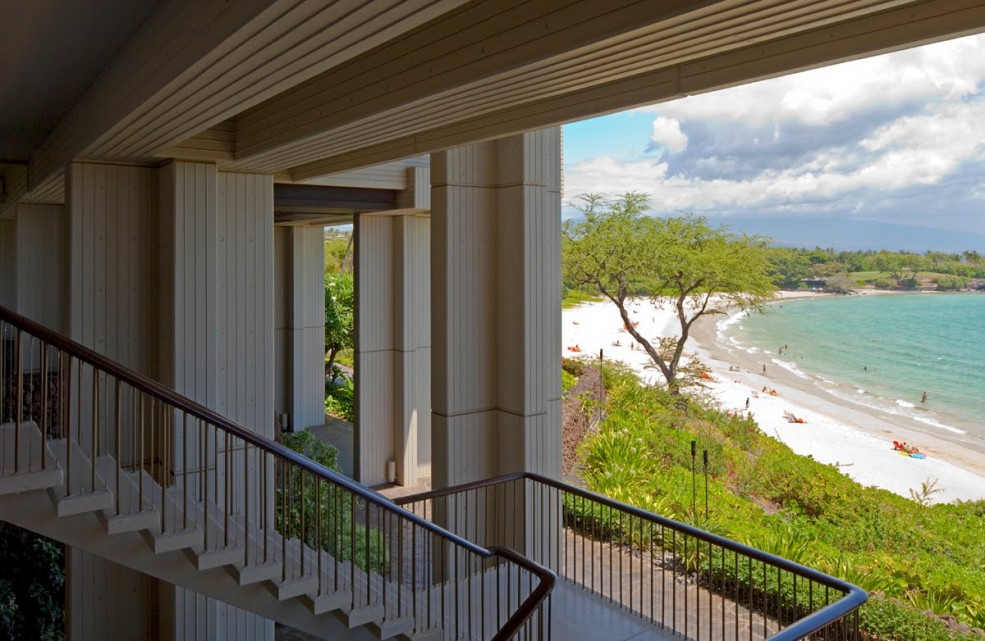
I got a chance to walk through the Mauna Kea Beach Hotel on the Kohala Coast of Hawaii.
The hotel was financed by Laurance S. Rockefeller and designed by the architectural firm Skidmore, Owings & Merrill. It opened in 1965 with an open-air design that allowed natural ventilation from the trade winds. It was one of the most expensive hotels of its time.
The hotel and beach are really wonderful and are a must-see if you visit the Big Island.
As an architectural photographer, I always enjoy visiting buildings that have played an important role in the development of modern architecture. Mauna Kea Beach Hotel is particularly interesting because of the way its design responds to Hawaii’s natural environment.
More than 60 years after its opening, the property remains an important example of mid-century resort architecture.
The History Behind Mauna Kea Beach Hotel
Mauna Kea Beach Hotel was developed during a period when Hawaii was becoming an increasingly popular destination for luxury travelers.
Laurance S. Rockefeller envisioned a resort that would take advantage of the island’s natural beauty without relying on the traditional architectural style of large mainland hotels.
The location on the Kohala Coast offered a remarkable setting, with ocean views, tropical vegetation, and access to one of the Big Island’s beautiful beaches.
The architectural firm Skidmore, Owings & Merrill, commonly known as SOM, was responsible for bringing the vision to life.
When the hotel opened in 1965, its design represented a different approach to luxury hospitality. Rather than creating an enclosed environment separated from the landscape, the architecture encouraged guests to experience the surrounding climate.
This relationship between the building and its location remains one of the property’s most distinctive characteristics.
Open-Air Architecture and Natural Ventilation
One of the most interesting aspects of Mauna Kea Beach Hotel architecture is its use of open-air spaces.
The design takes advantage of Hawaii’s trade winds, allowing natural airflow through portions of the property.
This approach was particularly innovative for a luxury resort built during a period when mechanical air conditioning was becoming increasingly common.
Instead of treating the tropical climate as something to shut out, the architects incorporated it into the guest experience.
Open corridors, sheltered gathering areas, and connections between interior and exterior spaces helped create a resort that felt integrated with its surroundings.
The design also reflects an important principle of tropical architecture: buildings can respond to local environmental conditions through thoughtful planning.
Natural ventilation, shade, and the orientation of spaces can influence comfort while reducing the need for mechanical cooling in suitable areas.
These ideas remain relevant in contemporary hospitality design.
Mid-Century Modern Architecture in a Tropical Setting
Mid-century modern architecture is often associated with clean lines, simple geometric forms, and an emphasis on functionality.
At Mauna Kea Beach Hotel, these principles were adapted to a tropical resort environment.
The architecture emphasizes openness and a connection to the surrounding landscape rather than elaborate decoration.
This approach allows the natural setting to become an important part of the overall design.
The ocean, sky, vegetation, and changing daylight all contribute to the atmosphere of the property.
For an architectural photographer, this creates interesting opportunities to explore the relationship between built structures and natural surroundings.
The building isn’t simply an object placed within a landscape. Its design encourages visitors to experience the two together.
That relationship is one of the qualities that makes the hotel an important example of modern resort architecture.
How Resort Architecture Shapes the Guest Experience
Hotel architecture does more than determine how a building looks.
It influences how guests move through the property, experience shared spaces, and interact with their surroundings.
At a beachfront resort, the transition between indoor and outdoor environments is especially important.
The location of corridors, gathering spaces, terraces, and guest accommodations can affect how visitors experience the ocean and surrounding landscape.
Mauna Kea Beach Hotel demonstrates how architectural planning can make the natural setting part of the hospitality experience.
Rather than relying entirely on decorative elements to create a sense of luxury, the property uses its location and open-air design as defining features.
This is a concept that continues to influence resort design around the world.
Photographing Historic Hotels and Resorts
My commercial photography work includes hotels, resorts, architectural interiors, and hospitality properties.
Although this visit wasn’t a commissioned photography assignment, exploring a hotel like Mauna Kea is valuable from a professional perspective.
Historic properties offer an opportunity to see how architectural ideas have evolved and which design decisions have remained effective over time.
When photographing resort architecture, it’s important to consider more than individual buildings or interior spaces.
The relationship between the architecture and its surroundings can be just as significant.
A wide photograph may communicate how a property fits into the landscape. A closer composition can emphasize architectural materials, structural details, or the transition between interior and exterior spaces.
Natural light also plays a major role, particularly in open-air environments.
As the sun moves throughout the day, shadows and highlights reveal different aspects of the building’s design.
Understanding these relationships is essential when creating architectural photography that accurately represents a hospitality property.
Why Mauna Kea Beach Hotel Remains Architecturally Significant
Many hotels undergo renovations and changes as guest expectations evolve.
Properties with a strong architectural identity, however, often retain the design principles that made them distinctive in the first place.
Mauna Kea Beach Hotel is an example of a resort whose original architectural concept remains central to its identity.
Its open-air approach, tropical setting, and mid-century design reflect an important period in the development of luxury hospitality architecture.
The property also demonstrates that thoughtful design doesn’t always require a building to dominate its surroundings.
Sometimes the most successful architectural decisions are those that allow the location itself to become part of the experience.
For anyone interested in architecture, photography, or the history of Hawaii’s resorts, Mauna Kea Beach Hotel is worth visiting.
I enjoyed having the opportunity to walk through the property and experience a classic example of Hawaiian resort architecture firsthand.

You might also like


