I photograph retail interior photography projects for a wide range of national and international clients. I recently completed another assignment at Neiman Marcus in Las Vegas, continuing years of work photographing retail environments for brands throughout the Western U.S.
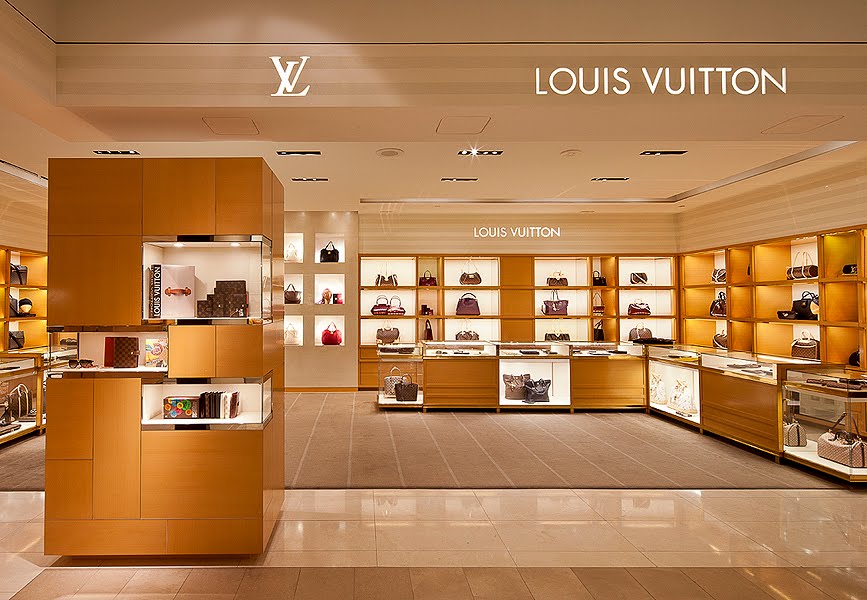
The image featured here is from a Louis Vuitton retail project. Over the years, I have photographed stores for brands including Adidas, Ben Sherman, Burberry, Carolina Herrera, Cartier, Dolce & Gabbana, Giorgio Armani, Lanvin, Prada, Tommy Bahama, and others.
Working with such different brands has given me an opportunity to see how much thought goes into creating a physical retail environment. Every store has its own identity, even when it is part of an international brand with locations around the world.
Photographing the Design Behind a Retail Store
Good retail design has several jobs to do at once. The space needs to represent the brand, showcase its products, guide customers through the store, and create an environment that people remember.
Retail interior photography needs to communicate those same qualities in a two-dimensional image.
The overall architecture is important, but so are the smaller details. Materials, display areas, lighting, furniture, signage, and the relationship between different sections of the store all contribute to the finished design.
Finding the right viewpoint is often more important than simply finding the widest possible view. A photograph should help someone understand the space while keeping the architecture and proportions looking natural.
Luxury Retail Creates Its Own Photography Challenges
High-end retail interiors can be deceptively complicated to photograph. Glass, mirrors, polished stone, metal, illuminated displays, and other reflective materials are common. A single composition may contain several different types of light.
Those elements are part of what makes the store visually interesting, but they also require careful attention when photographing it.
Color is particularly important. Materials and finishes were selected deliberately by the design team, so they should look accurate in the final photographs. Perspective also matters. Excessive distortion can make carefully designed architecture appear very different from how it looks in person.
The objective isn’t to make the store look like something it isn’t. The photography should communicate what the architects, designers, and brand teams created.
One Brand, Many Locations
International retailers also face an interesting challenge. Their stores need to feel recognizable as part of the same brand while adapting to different buildings, cities, shopping centers, and markets.
Professional retail photography creates a visual record of how those concepts are translated into individual locations.
The resulting images can serve many purposes. Architecture and design firms may use them to document completed projects. Brands can use them for marketing, public relations, internal presentations, publications, and digital content. Contractors and other project partners may also need professional images of the completed work.
For companies managing locations across several cities, maintaining a consistent standard of photography can make the entire collection feel more cohesive.
Experience Across Different Retail Environments
Photographing stores for many different brands also reinforces an important point: there isn’t one formula for photographing a retail interior.
A fashion boutique may call attention to materials and carefully arranged displays. A jewelry store can present an entirely different set of challenges involving glass cases, mirrors, small details, and reflective surfaces. A large department store requires another approach because of its scale and the number of visual elements competing within the frame.
The photographer has to respond to the space rather than impose the same style on every project.
That is what continues to make retail interior photography interesting to me. Each assignment involves understanding how the space was designed, identifying what makes it distinctive, and finding compositions that communicate those qualities clearly.
If you have a retail project in the Western U.S., you can contact me to discuss photographing it.

You might also like


