I was hired by the home office in New York to photograph interiors of the new John Varvatos store inside the Hard Rock Hotel in Las Vegas. My favorite part of the store was this section with the vintage stereos and albums. It really brought me back to my childhood growing up in L.A.
The store has a great feel and vibe with lots of classic rock memorabilia on the walls.
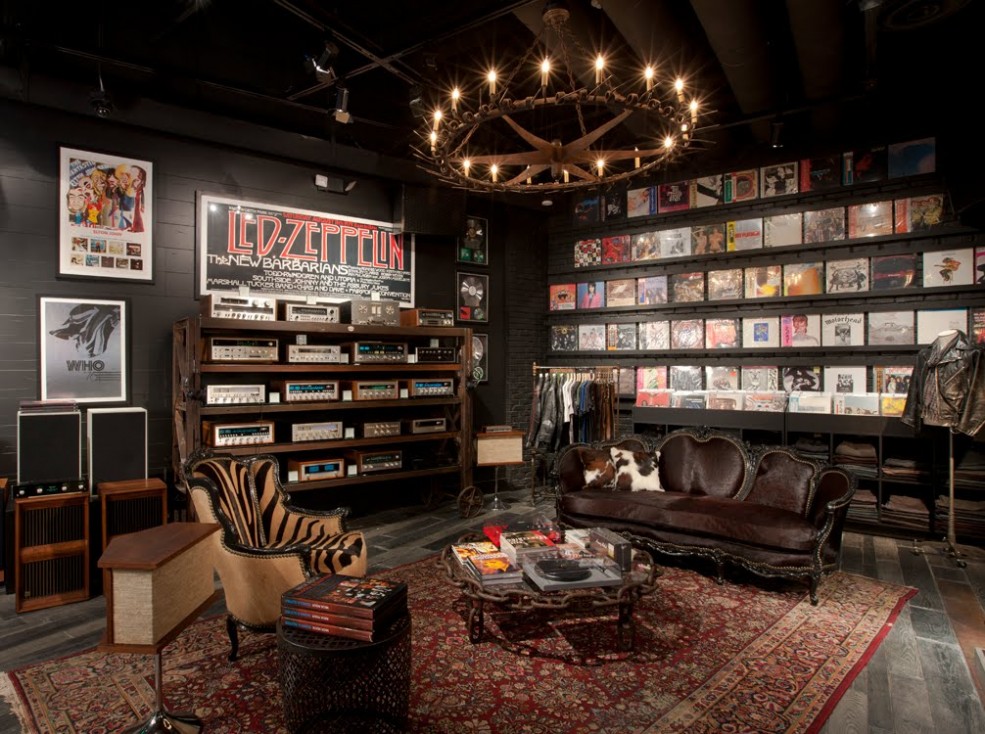
Shortly after the shoot I ended up buying the McIntosh receiver on the top shelf in this room. This was the beginning of my addiction to McIntosh stereo equipment.
That personal connection is probably one reason this particular retail store photography assignment has stayed with me. But it also illustrates something interesting about photographing branded interiors: the best retail spaces communicate much more than what a company sells.
When the Store Becomes Part of the Brand
Walk into two clothing stores selling products at similar price points and the experience can feel completely different.
Interior design plays a major role in creating that distinction. Lighting, furniture, materials, artwork, displays, colors, and even objects that aren’t for sale can communicate something about the brand before a customer looks at a single product.
The John Varvatos store was a particularly good example because music was such a visible part of the environment. Vintage stereo equipment, records, and classic rock memorabilia weren’t simply decoration. They gave the space personality and helped establish its atmosphere.
For a photographer, those details are important.
A complete set of retail interior photography shouldn’t consist only of wide photographs showing the size and layout of the store. Those establishing images are necessary, but tighter compositions can reveal the elements that make one retail environment different from another.
Photographing Character, Not Just Square Footage
One challenge with commercial interiors is deciding what deserves to be photographed.
It would be easy to approach every retail assignment with a checklist: photograph the entrance, get a few wide views, document the displays, and move on.
That may document the space, but it doesn’t necessarily explain it.
Before photographing a store, I like to look for the elements that give it character. Sometimes that’s an unusual material or lighting feature. It might be a custom display, furniture, artwork, or the way merchandise has been integrated into the architecture.
At John Varvatos, the vintage audio room immediately stood out.
It was visually interesting on its own, but it also told you something about the personality of the store. That’s exactly the type of detail worth including in commercial interior photography because it provides context that a conventional wide-angle photograph may miss.
Why Details Matter in Retail Photography
Designers put an enormous amount of thought into details that customers may experience without consciously analyzing them.
Photography has the ability to slow that experience down.
A visitor walking through a store might spend only seconds looking at a particular display. A photograph isolates that design decision and gives someone time to notice the textures, objects, lighting, and relationships between individual elements.
That’s particularly useful when photography is commissioned by a company’s corporate office.
The people responsible for a national or international retail brand may not be able to visit every completed location personally. Professional photographs provide an accurate visual record of the finished store and how the brand concept was implemented in that particular market.
Those images can then support internal presentations, design portfolios, publications, public relations, marketing materials, and future store development.
Every Retail Brand Requires a Different Approach
After photographing stores for many national and international brands, one thing becomes obvious: there shouldn’t be a single visual formula for retail store photography.
A luxury jewelry boutique and a fashion store with a strong rock-and-roll influence shouldn’t look interchangeable simply because the same photographer created the images.
The architecture should lead the photography.
That means looking at how the store was designed, understanding which features give the space its identity, and then choosing compositions that communicate those qualities.
Wide photographs establish scale and layout. Medium views show how different areas relate to each other. Detail photographs reveal materials, displays, craftsmanship, and personality.
Together, they create a much more complete record of the finished project.
The Assignments You Remember
After years of commercial photography, certain assignments remain memorable for reasons that have very little to do with their size.
This John Varvatos project is one of them.
I was there to photograph a newly completed retail interior for the company’s New York office. I left with a set of photographs – and, not long afterward, a McIntosh receiver that started an entirely separate interest in vintage and high-end audio equipment.
That’s one of the unexpected benefits of photographing so many different commercial environments. You spend time looking carefully at spaces other people have spent months or years creating. Occasionally, something you discover while working stays with you long after the photographs are delivered.
In this case, it happened to be sitting on the top shelf.

You might also like


