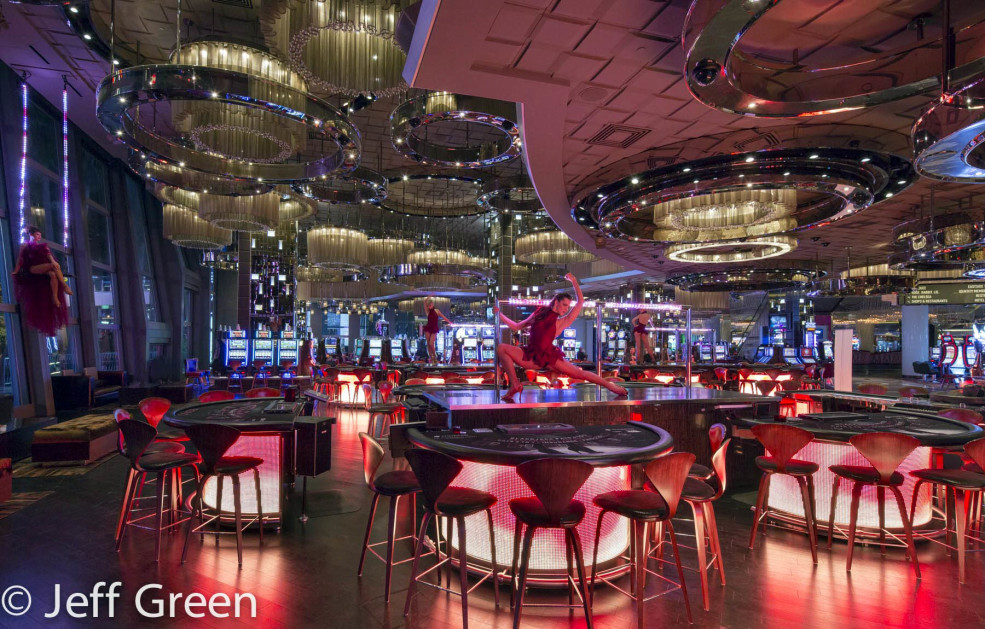
Interior architectural photography Las Vegas at the Cosmopolitan hotel.
Here is an image from a recent architectural shoot at the Cosmopolitan in Las Vegas. This is in the new gaming area at the hotel called the Bond.
Designing an Atmosphere, Not Just a Room
Hospitality spaces are designed to evoke a feeling. Casinos, lounges, and entertainment venues rely on lighting, architecture, textures, and layout to create an environment that feels energetic while remaining comfortable and inviting.
Professional architectural photography should capture more than the physical space. It should communicate the atmosphere that designers and architects worked to achieve. Every lighting fixture, reflective surface, and architectural detail contributes to the overall experience, and photography helps preserve those relationships in a natural way.
Photographing Challenging Interior Lighting
Casino interiors are among the most technically demanding environments to photograph. Decorative lighting, illuminated displays, polished surfaces, and darker ambient conditions all exist within the same frame.
Rather than overpowering the scene with artificial lighting, successful interior photography balances the existing atmosphere while maintaining accurate colors and architectural detail. The goal is to produce photographs that reflect what guests actually experience when they walk into the space.
This approach also preserves the design intent, allowing architects, designers, and hospitality teams to present the environment as it was originally envisioned.
Why Hospitality Design Deserves Professional Photography
Hospitality projects often involve years of collaboration between architects, interior designers, lighting specialists, and construction teams. Once completed, professional photography becomes one of the primary ways those projects are presented to future guests, publications, and potential clients.
High-quality images continue supporting hotel websites, advertising campaigns, architectural portfolios, editorial features, and marketing materials long after the project is finished.
Assignments like this demonstrate that architectural photography is about more than documenting interiors. It helps communicate mood, design, and the overall guest experience while preserving the creativity behind every hospitality project.